
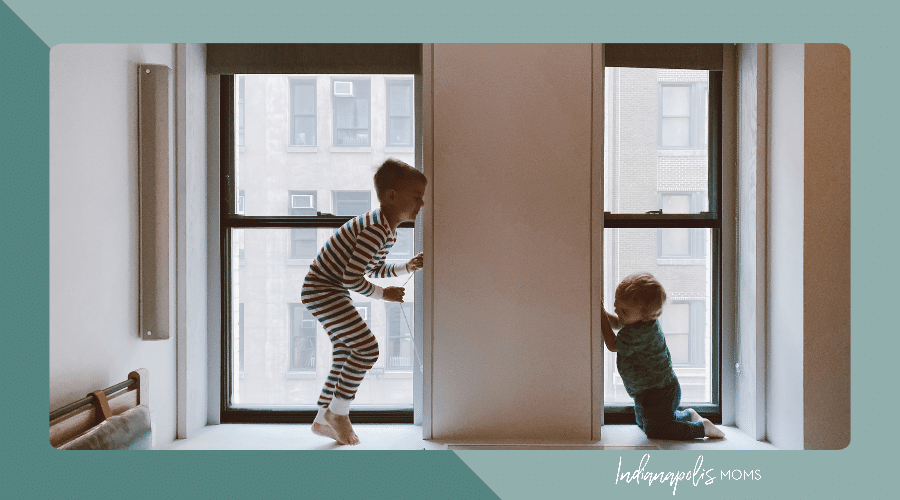
 Nothing screams tearjerker quite like a homecoming video of small children jumping into the arms of an older sibling. I mean, it may as well be a Christmas morning Folgers commercial. I’m done for. And yet, my Facebook feed is full of these reels… of my own kids.
When you have a really big family like ours, you get a lot of questions. Some are a bit crass. “Do you know how that happens?” Ahem. Side eye. But others come from genuine curiosity, and one of the questions I hear most often is about our kids’ relationships with each other. “They love each other so well.” Or, my personal favorite: “They look like they actually like each other.” And they do.
Don’t get me wrong. We are incredibly ordinary. Our eight kids can squabble, annoy, disagree, and push each other’s buttons with the best of them. Our parenting manual is currently on its 27th edition. It is tear-soaked, coffee-stained, and has been painstakingly revised through trial, failure, love, prayer, and occasional panic. But the question got me wondering: Why do some siblings grow up with incredibly strong bonds while others never really seem to gel?
I don’t have a research study or a magic formula. So I went straight to my own highly scientific focus group: our eight kids, the Bigs, the Middles, and the Littles, and asked them why they think our family works. Their answers made me realize we have been intentionally building sibling relationships for years, sometimes without even realizing it.
Make Family Part of Their Identity
Our family isn’t really a product of what we do. It’s who we are. From the time our children were very young, we taught them that family comes first, only after faith. We encourage them to pray for each other, think about each other, and show up for each other. Neighborhood kickball game and teams are being picked? You better believe you pick your sister over your friend. DNA over dudes. When one of our kids is tempted to get especially ugly with a sibling, one of our standard reminders has always been, “These are your best friends for life. They will be with you longer than we will.”
That sounds dramatic when they’re eight and arguing over who gets shotgun. It sounds a whole lot less dramatic when they’re 27 and calling each other for advice. We feed the sibling bond in little ways and big ones. Need your hair braided? Done. Football game? Everyone is there, probably in matching shirts. Having a rough night at college? Two-hour FaceTime. Missing each other from an ocean away? Late-night video game date. Those relationships didn’t suddenly appear when our kids got older. They were built in a thousand tiny moments when we communicated: Your siblings matter. Show up for them.
Teach Them That Fair Does Not Mean Equal
This is a hard-embedded truth in our house: Fair is not equal. Everyone gets what they need, and not everyone needs the same thing. None of our children asked to be part of a big family. My husband and I chose that. More importantly, we chose each of them. So we have always tried to operate from the mindset that being part of a large family should never diminish an individual child’s portion of us. They don’t have to compete for our attention, affection, praise, or resources. Each child has individual value, individual strengths, and individual needs. Sometimes one child needs more of us. Sometimes another needs less. Sometimes what a child needs most actually comes from a sibling. That is when family becomes a blessing: built-in teammates for life.
At the same time, while our kids don’t always receive the exact same things, they do share the same environment and expectations. We are all in the same Hauser boat. Our children know how Hausers show up in the world. We work hard. We are disciplined. We treat people well. We help. We contribute. We do the right thing even when it isn’t particularly convenient. Honestly, it’s character development over vegetables around here. I should probably have a tattoo that says, “That’s just how our family does…” The application may look different for each child, but the underlying systems are the same. And there is something bonding about growing up with people who understand your family’s culture without explanation. “It’s a Hauser thing. You wouldn’t understand.” Exactly.
Encourage Competition, Just Not With Each Other
My kids are fiercely competitive. Sorry. That’s what happens when a firstborn marries a firstborn. You create a rivalrous gene pool. We absolutely encourage our kids to compete. We want them to work hard, improve, set goals, and push themselves. We just don’t want their siblings to be the opponent. Instead, we encourage them to push one another toward becoming better versions of themselves. Sometimes that means encouraging a sibling to choose better friends. Sometimes it means reminding someone to read their Bible. Sometimes it’s helping with schoolwork, pushing through a workout together, or telling your brother to organize his room because apparently hearing it from a sibling is wildly different from hearing the exact same words from your mother.
Years of laying that foundation have resulted in many of those conversations happening within the sibling group now, without us. Within our family, competition isn’t about proving you’re better than your brother or sister. It’s about learning from each other’s strengths and helping your siblings become the best version of themselves. That also means my husband and I try very hard not to create competition from the top down. No comparisons. No sides. And definitely no, “Why can’t you just be more like your sister?” Each child should feel secure enough in his or her own place in the family that another sibling’s success doesn’t threaten it.
Be the Coach, Not the Referee
Of course, siblings still fight. A lot of parents ask how we handle that, and somewhere along the way we adopted a philosophy: coach, don’t referee. When possible, we don’t rush in, decide who’s right, declare a winner, and dispense justice. Instead, we try to coach our kids through conflict resolution and problem-solving. What happened? What part of this is you? What could you have done differently? What do you need to do next? The goal isn’t to create siblings who never have conflict. That’s impossible. The goal is to raise people who know how to be in relationships. Over time, we want them to need us less and less as they learn to work through problems with each other independently.
We also have to continually check ourselves for gender bias. My kids call me on this one all the time: “Would you do this for the girls?” Well. Sometimes Mom needs coaching too.
Let Them Share a Life
We don’t have a nine-bedroom house, so our kids share rooms. But they share a lot more than square footage. They share experiences. Memories. Expectations. Traditions. Values. Goals. They also share work. They work together on schoolwork. They work around the house. They work out together for sports. They help each other accomplish things that would be harder alone. There is something powerful about everyone swimming downstream together. Shared work creates shared investment. Shared experiences create inside jokes. Shared struggles create stories. Shared traditions create a sense of belonging. And all of those little things eventually become family history, family culture.
Teach Them: It’s Not All About You
Sports are valuable because they teach things like discipline, teamwork, goal-setting, work ethic, perseverance, and how to handle disappointment. Sibling relationships can teach many of the same lessons. Family is often a child’s first experience with being part of a team. Being one of eight kids means you are occasionally going to wait. Someone else may need Mom first. Your sister’s game may be what the family is doing tonight. Your brother’s accomplishment may be what we’re celebrating today. And that’s okay.
We intentionally prompt our children to think about each other. We keep tabs on instant gratification. We ask them to notice when someone needs help. We expect them to contribute to something bigger than themselves. In a culture that constantly tells our children to focus on themselves, their happiness, their preferences, their comfort, siblings offer a daily reminder that life is lived in relationship with other people. Strong sibling bonds can push back against entitlement because they teach children a wonderfully inconvenient truth: It’s not always about you. We teach our kids that, in a very real sense, we are each other’s responsibility. Not responsible for each other in an unhealthy way. Responsible to each other. We notice. We encourage. We celebrate. We tell the truth. We forgive. We show up. And maybe that’s the biggest thing I’ve learned from raising eight kids who genuinely enjoy each other. You can’t force siblings to be best friends. You can’t manufacture closeness or guarantee what their relationships will look like when they’re adults. But you can create a family culture that treats sibling relationships as something worth protecting.
You can give children room to be individuals without making them competitors. You can teach them how to disagree without destroying a relationship. You can create shared experiences, shared expectations, shared work, and a shared identity. You can remind them, over and over again, that the people sitting around the dinner table are their most valued assets. They’re their team. And if you’re lucky, one day you’ll open Facebook and find a video of your grown child coming home while the younger ones sprint toward them like they’ve been separated for decades instead of a semester. And you’ll cry like a baby.
Every. Single. Time.