 The cost of everything is wild right now; am I right? It’s not just that things are “a little higher” than they used to be. Prices are up across the board, and you feel it in ways that are hard to ignore. Groceries cost more every single week, kids’ clothes somehow feel more expensive even though they’ll still outgrow them in a matter of months, and the small things you used to replace without thinking now come with a pause.
While families are adjusting, tightening budgets, and being more intentional, it’s hard not to look around and wonder how we got here. We hear about inflation, supply chains, policy decisions, and billions being spent in places that feel very far removed from everyday life. There’s a disconnect between what’s happening at a government level and what it looks like in a kitchen when you’re trying to figure out how to feed your family for the week without taking out another mortgage. That reality has changed the way I shop.
Buying secondhand and reselling is something I started for the enjoyment and the environmental impact, and it has now become something that just makes practical sense. It’s not about being trendy or even particularly strategic. It’s about adapting to what’s in front of us. When everything costs more, secondhand becomes less of an alternative and more of a solution. It allows you to keep up with real, everyday needs without constantly feeling like you’re overspending. Especially with kids, where the cycle of needing new sizes never really stops, it’s hard to justify paying full price over and over again for things that have such a short lifespan in your home. Shopping secondhand (and then reselling your outgrown clothes) gives you a way to stay on top of those needs without the same financial pressure.
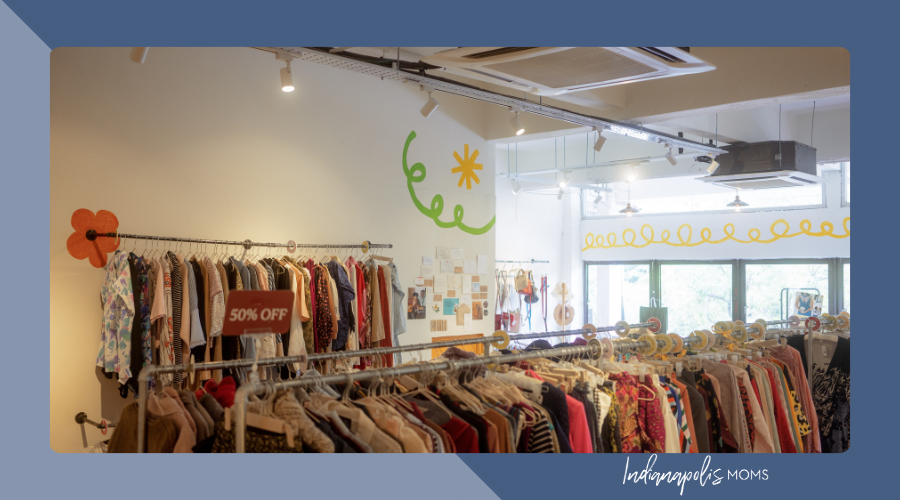
Over time, it starts to shift how you think about value. You realize how much is already out there. Clothes that have barely been worn, items that are still in great condition, things that were used for a short season and then set aside. It becomes harder to ignore how much we’ve been conditioned to buy new, replace quickly, and move on, especially when there are perfectly good options sitting right in front of you. Shopping secondhand has become easier than ever as well with consignment stores, large event consignment sales, thrift stores, marketplaces through social media, and many different resale apps and websites.
For me, that mindset connects to a bigger picture too. The idea of reducing what we can, reusing what already exists, and being more thoughtful about what we bring into our homes. There’s also something about shopping secondhand that naturally slows you down. You’re not impulse buying in the same way. You’re looking, considering, deciding if something is actually worth it. It adds a layer of intention that’s easy to lose when convenience is the default. There’s something satisfying about finding what you need without overpaying for it, about putting together something for your kids that works, looks good, and didn’t cost a fortune, and about knowing that you’re making choices that align with both your budget and your values, even in a time where both feel stretched.
I don’t think secondhand shopping is just a side hobby anymore. I think for a lot of families, it’s becoming part of how we navigate this moment. We need to grow in our awareness about how and where we spend our money. Sure, this doesn’t solve everything, but it helps me feel like I’m able to take back some control when things feel out of control. It’s one small way to be more intentional and to opt out of the constant pressure to keep feeding a system that profits from overconsumption. Right now, that control isn’t insignificant; it’s necessary.