
Every summer, parents start hearing the same warning. “Don’t let your child experience the summer slide.” The phrase refers to the academic regression that can happen when children spend two or three months away from school. Suddenly we’re seeing advertisements for workbooks, tutoring programs, flashcards, and summer learning camps designed to keep kids from “falling behind.” As both a parent and an educator, I understand the concern. But I also think we’re asking the wrong question. Instead of asking, “How do I keep my child from losing what they learned?” maybe we should ask: “What can my child gain this summer that they don’t always have time to learn during the school year?”
Because summer shouldn’t feel like school. It also shouldn’t feel like three months of unlimited screen time and complete chaos. The sweet spot is somewhere in the middle. Our goal isn’t to recreate the classroom. It’s to keep growing curious minds, capable kids, healthy bodies, and strong relationships. Here are a few simple ways to do exactly that.
Read Every Day…But Keep It Fun
Ask almost any teacher what makes the biggest difference over the summer, and you’ll hear the same answer: Read. Reading remains one of the strongest protections against academic regression, but that doesn’t mean children need to spend hours completing book reports. For younger children, read aloud together. Ask prediction questions. Let them retell the story. Make connections to their own lives. For older children, give them choice. Graphic novels count. Sports biographies count. Mysteries count. Audiobooks paired with a physical book count. The goal isn’t checking off pages. The goal is helping children discover that reading is enjoyable enough to choose on their own. Better yet, make it a family habit. There’s something powerful about children seeing adults read, too.
Hide the Learning in Everyday Life
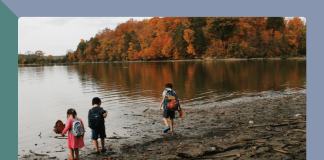
One of my favorite parenting tricks is sneaking learning into ordinary moments. You don’t need expensive programs or stacks of worksheets. Real life is full of opportunities. At the grocery store, children can compare prices, estimate totals, calculate discounts, or determine which product offers the better value. Cooking naturally teaches measuring, fractions, following directions, and problem-solving. Road trips become geography lessons. National parks become science lessons. Creek stomps become biology lessons. Children often learn best when they don’t even realize they’re learning.
Keep a Rhythm, Not a Schedule
Summer deserves a slower pace. But that doesn’t mean eliminating every routine. Our brains actually thrive on predictability. For many children, having completely different wake-up times, meal times, and bedtime routines all summer makes the transition back to school much harder. Instead of creating a minute-by-minute schedule, create a simple daily rhythm: Maybe mornings include chores, reading, and outdoor time. Afternoons are for swimming, friends, or free play. Evenings become family time, books, and a consistent bedtime. Structure doesn’t eliminate freedom. It creates it. When children know what’s expected, everyone relaxes.
Make Capable Kids, Not Just Happy Kids
Summer gives us something the school year rarely does: Time. Instead of lowering expectations, use that extra time to increase responsibility. Young children can make beds, put away laundry, or feed pets. Elementary-aged children can help prepare meals, pack for outings, and manage simple responsibilities. Tweens and teens can learn to budget money, cook basic meals, organize their schedules, or plan family activities. Summer isn’t just for making memories. It’s for making capable kids.
Protect Social Skills
Academic skills aren’t the only things that get rusty. Social skills need practice too. Children need opportunities to negotiate, share, solve disagreements, read social cues, and build friendships. Play dates, neighborhood adventures, vacation Bible School, team sports, family game nights, volunteer opportunities. These experiences build skills that worksheets never could. And let’s be honest, sometimes kids need practice simply learning how to get along with other humans.
Don’t Rush to Solve Boredom
One of the biggest contributors to today’s summer slide may not be academics at all. It’s screens. When every moment of boredom is immediately replaced by a device, children miss opportunities to imagine, invent, create, and solve problems. Boredom isn’t a problem to solve. It’s often where creativity begins. Give children a chance to wonder what they might do before handing them a screen. You may be surprised by what they create.
Teach the Skills That Matter for Life
Some of the greatest gains children make over the summer have nothing to do with multiplication facts or spelling words. They’re learning executive functioning skills: Planning, organizing, managing time, making decisions, following through. These skills are some of the strongest predictors of long-term success. Invite your child to plan a family picnic, organize a lemonade stand, budget spending money for vacation, help create the weekly meal plan. They’re learning far more than you realize.
Let Curiosity Lead
Children naturally become experts when they’re fascinated by something. Maybe this is the summer of dinosaurs. Or baking. Or fishing. Or photography. Or coding.
When children pursue their interests, learning happens naturally. Sometimes the best education begins with simply asking, “Tell me more about that.”
Summer Was Never Meant to Look Like School
Yes, keep reading. Yes, keep learning. But don’t miss the bigger opportunity. Summer gives children space to become more independent. More creative. More responsible. More confident. More curious. Those aren’t distractions from learning. They are learning.
At the end of the day, our goal isn’t to raise children who are simply good at completing worksheets. Our goal is to raise children who are good at life. Summer just might be one of the very best classrooms they’ll ever have.