
 For decades, my relationship with running was… complicated. And by that, I mean I believed it was an obligatory part of getting in shape. If I wanted to be fit, I had to run, no matter how awful it was. Why were people running for 26 miles on purpose? Insanity!
Over the years, I fell in and out of fitness routines. Every six weeks or so, life would happen, and I’d be away from the gym for several weeks. Eventually, I’d begrudgingly have to return and start from zero once again, which made running suck even more.
In the last few years, essentially since the beginning of the pandemic, I’ve grown to love running. I even raced a half-marathon. (26.2 miles is still for crazy people.) Now, I get grumpy when I go too long without running. I even run on vacation!!
Through this journey, I’ve made a lot of mistakes. Learn from me, and maybe your running journey will be less painful.
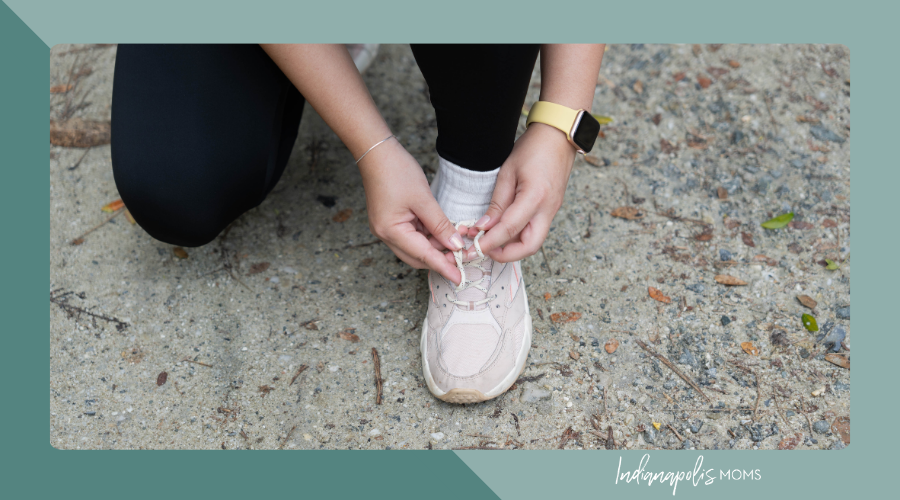
Buying the wrong shoes
When I first started running, I bought some shoes off the clearance rack at DSW. Look at me! I’m such a bargain shopper.
Well, those sneakers gave me excruciating shin splints. Pain makes running miserable.
I eventually went to a running store and got professionally fitted for shoes. Turns out, your legs don’t have to ache, and your feet don’t have to blister. With the right footwear, pounding the pavement actually feels pleasant.
When I was training for the Indy Mini, my ankles started hurting after mile 7 on long runs (very specific, I know). I went back to the shoe store, and they recommended a different model that’s better for distance. Problem solved!
I know it’s tempting to buy the cheapest or prettiest shoe, but your body will thank you for talking to a professional.
Running too fast
How could people run for miles? My lungs and legs were ready to give out after one. And recovering in a jog? Impossible. I must not be built for running.
Wrong. Turns out I was going way faster than my fitness level. I thought 5 mph was a jog. Turns out, 4.3 mph was my easy pace; 5 was a hard pace. Mind. Blown. No wonder logging miles felt impossible.
Once I started using this new speed, running became doable and even enjoyable. I could go for miles and miles.
Not sure how to determine your paces? They have calculators online. Or you can run by feel. Easy pace should feel easy, even if it’s as slow as a power walk with some bounce. Don’t feel self-conscious; many of us are right there with you.
Doing too much too soon
When the pandemic started, I decided I’d run a mile a day. Turns out you can’t go from three short runs a week to seven. And you definitely can’t sustain that regularity for more than a week or two. My overly ambitious endeavor gave me what’s known in the running community as “runner’s knee.”
I went to physical therapy. I went to an orthopedist. It was a whole thing.
The end result: We finally bought a Peloton bike because I couldn’t run.
Eventually, I gained the strength and flexibility to overcome this injury and return to the track. Which brings me to my next point.
Not resting and recovering
Rest and recovery are part of a well-rounded training plan. It’s nonnegotiable. Your body needs time to absorb your training and heal itself.
Overuse leads to injury (see #3) and other surprising symptoms like insomnia, anxiety, and even depression. Guess how I know?
It may run counter to fitfluencer culture, but you don’t always have to do the most. In fact, most workouts shouldn’t be a max effort. The general recommendation is 80/20. 80% slow and easy; 20% hard.
And if your body is screaming “NOOO!”, listen to it, even if it’s not a scheduled recovery day. Maybe do something slower or shorter, or just let yourself rest.
Not warming up or cooling down
When your body is warmed up, your muscles are ready to work like they’re supposed to. Starting a run with sleepy muscles is a recipe for something to go wrong, whether it’s an uncomfortable, inefficient outing or an injury.
For some, a light jog may suffice as a warm-up. But as you get older, you need a little bit more (it’s me — I need more). I recommend lunges, clamshells, butt kicks, and high knees.
Stretching afterward also helps keep you from getting stiff. Honestly, we should all stretch daily, even if we didn’t run.
Not eating enough
The running and nutrition communities agree: You can run to lose weight or to improve performance. You can’t do both.
If you’re training for a race or running long distances regularly, you need to fuel properly. That means carbs, both simple and complex. If you don’t eat enough, you’re going to feel awful during and after your run. Period.
I love following the Running Dietitian. She removes the guilt of eating to fuel your run.
Pro tip: You don’t need any fancy gels. The guy at the running store told me fruit snacks and gummies would do the same thing for me as a novice runner. If my session is more than an hour, I take some pocket gummies for mid-run fuel. And I always snarf a couple of sugar candies a few minutes before I head out the door. It makes a big difference.
Tangential: Watch out for runner’s stomach. It’s totally normal, but it’s a bummer.
Start off on the right foot
Running can be fun, but not if you’re injured, run down, or pushing yourself too hard. Hopefully, these warnings will start your running journey off on the right foot (ha!). Maybe I’ll see you out on the Monon soon!